Saturday, April 20, 2019

A 'Sudden' urge


All the faces of Spring have been seen this week; wet flurries, a final goodbye to winter; warm rains conjuring green out of brown, vibrant life out a barren ground in a seeming instant; and the brilliant smile of the sun which gladdens the heart and assures us that cold weather is indeed behind us. And all the people said..Amen!


Some cold seasons seem especially long so when the first warm day finally arrives, it feels everyone heaves a collective sigh of relief. We have survived another winter and the sunshine brings a renewed sense of hope and optimism. After long months of dark days, bad weather and winter ailments, you just want to shed heavy coats and feel the sun on your face.


On this first glorious day, the need to be outside was overwhelming so I headed out in my faithful green chariot. She is a lady of a certain age, somewhat like myself, but always up for an adventure. The wonderful thing about living in an area for a while is that its roads and trails become old friends. You know where the osprey nests are, or where you can see a muskrat or a bobolink or the first coltsfoot. 


I chose the Sudden Forest Tract because it has so many of my favorite things like boardwalks, water and wildflowers. Perfection. It is a little drive north but I chose the back roads so that dawdling and pulling over to take photos does not cause road rage in any other motorists. 


On the way I was excited to discover that the osprey have returned to our area.  There was one perched at the top of a communication tower where a nest remained from last year.  Ospreys are true 'fish hawks' so they nest where there is good fishing available, and their presence is said to indicate a healthy river system. 
 

This platform is near a large field that bobolinks nest in. The first indication of their presence is usually a sighting on the wire fence. On this day the only fence sitter was a lovely Savannah sparrow, identified by a vivid yellow face marking. 


It was a delight to be greeted at the entrance to the forest tract by a Mourning Cloak. These butterflies, as well as the lovely Comma, overwinter as adults in the leaf litter or a tree crevice so are usually the first butterflies that you will see in the spring. 


This is an area of wetland so one of its wonders includes Snakeskin liverwort, also called Great scented liverwort or more formally Conocephalum conicum. There are thousands of liverworts, but interestingly, a Harvard University blog spoke of research being done with a a cannabinoid called perrottetiene (PET), found in the liverwort plant Radula perrottetii to see if it has new benefits which would make it an alternative to medical cannabis. Who knew?


It is easy to see why it is called Snakeskin liverwort, but the 'conicum' part of its formal designation comes from the little cone-shaped structures that are the female reproductive structures.


This is one of the boardwalks and it previously connected to another raised walkway by a wooden sidewalk through the woods. On this particular day that section was really muddy and I had to pay attention to staying upright and keeping my boots still on my feet. On the opposite side the wetland gives way to hills and vernal ponds. On this side I saw Wintergreen that still had berries,


the first open Hepatica blooms, 


gorgeous mosses,


and the first of the season's snakes...sigh.


The trail circles back to the wetland and I noticed that Marsh Marigolds leaves were emerging and even saw a few early buds.


There were patches of tiny trumpets which are a lichen species called Cladonia,


a fungus flower,


and unique perched trees.


Sometimes it feels so self-indulgent to spend this much time in the pursuit of solitude. It is however, not recreational so much as something visceral and as necessary to me as breathing. The forest is a spiritual place; a place to marvel at design and form; to allay anxiety for a time; to take a deep breath. One can set aside the big worries in life like climate change and the willful disregard of the human condition in the world, as well as the personal worries about health, finance or family matters. It is a chance to wonder at beauty and make a new furry friend when you are missing your own.


The forest soothes the hurts and calms the spirit; gives hope and re-energizes.
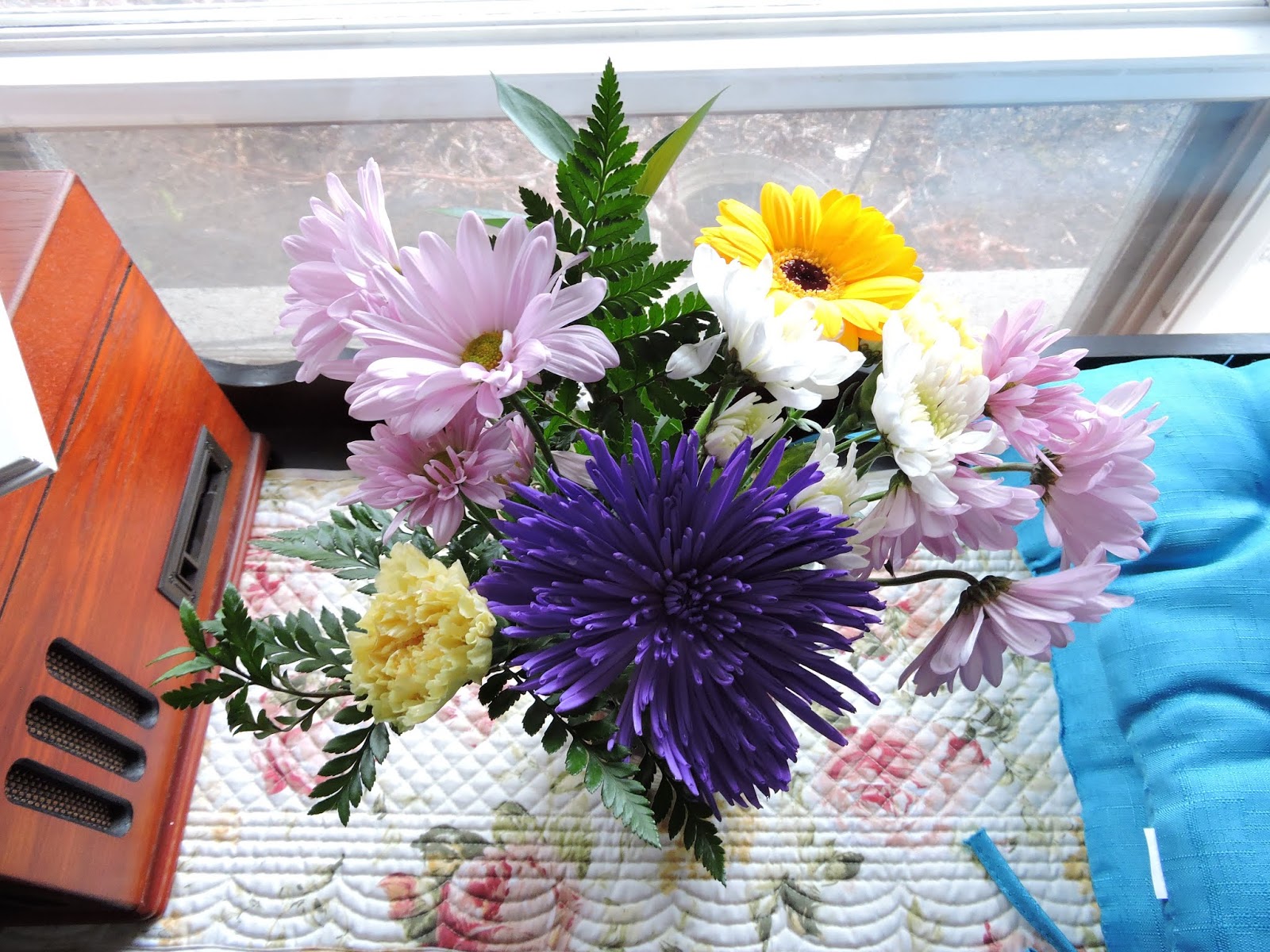

For my dear husband, who still brings me flowers, and sets me free to roam.


Saturday, March 30, 2019

The shape of things...


Spring is a wee bit slow this year. Soon the rain will come bringing its coat of green to the forest. It occurred to me that these are the last moments when the forest is at its starkest; its shape and flaws are apparent. Soon I will be distracted by all things green and the underlying beauty will be cloaked from view once again. 


It is a human flaw, or perhaps just a flaw in me, that I harbour an unrealistic expectation, maybe just a hope, that things remain the same in my world. We have lived here for almost 25 years now and nothing in my personal landscape has remained the same; there are welcome additions, mourned losses, and goodness knows that a glance in the mirror shouts that I am changed, so it is foolish of me to expect my surroundings to have remained static.  


It just seems like the forest landscapes are so very changed in the last year or two. The loudest sound that I heard on a section of rail trail the other day, was hammering. The city and county renegotiated boundaries and this has allowed a vast new area to be developed which now leaves only a narrow green band at the edges of the path. So very distressing.

Across that field houses are being built and you can see the blue of the insulation and the plywood of roofing


The number of trees felled by erosion, weather, infestation or age recently seems distressingly large to me. The number of grand old trees in the forest is decreasing and this time of year gives a last moment to properly admire the shape of their canopy and the texture of their bark.


Such marvelous variety.


This hemlock shines when the deciduous trees are bare.


The winter is also the time when the beauty of sycamore trees is displayed.


The forest floor that is now so open, will soon be shuttered from view by the green things that are sleeping in the ground and getting ready to waken. They will disguise the fallen logs and the banks of the creeks and soften the appearance of the years damage.

Bank erosion bares the roots of this tree..

and the roots of this tree are now on the surface of this wetland. 


Being the optimist that I am..not, I tend to be distrustful of change, thinking of it almost always, in a negative way. My children, who are more pragmatic, remind me that change is a normal and natural process that is to be expected. My mature response is 'well, I don't have to like it!'. I think that our trees are precious and wish that they were impervious to peril and pestilence.


A man was walking his dog in a conifer section of the forest recently and he had a pole over shoulder, like a 1930's hobo. Our paths intersected a little later, and I saw that he was carrying 2 bags of collected garbage and a tire on his pole over his shoulder. He told me that for the past two years, he had been collecting trash from this section of forest. I thanked him for his work and told him how admirable I thought it was. 


He told me that that this area was a dumping area many years ago when this part of town was not densely settled. At some point the city decided to plant a pine forest in this spot with the goal of harvesting them at a later date. When that time arrived, folks had decided that they were now enjoying the forest as a place to walk and blocked the harvesting of the trees. Good outcome right? Well, except for the fact that these trees have a specific lifespan, and were also planted in a pattern for harvesting so not with a healthy mix of trees for sustainability. So, what is now happening is that the trees are coming of age at the same time, vulnerable to age and pests at the same time, and are now falling like dominoes. This gives a perspective for some of the startling recent changes in this forest tract. You never know who you will meet or what you will learn during a random conversation when you are walking.


The greening of the forest will make many other things less obvious, like


 traces of the railways that passed the borders of farms in this area... or


this red-tailed hawk's nest...


this hidey hole for a napping raccoon...


or this worn stone that marks a judgement about a land border dispute. Fascinating, but nearly invisible once the grasses grow at the road edge.

Today's rain will bring green to the lawns and buds to the trees. The excitement of seeking out new signs of spring will probably assuage this momentary melancholy, but it is a good practice to mark the changing of the season with appreciation for the beauty displayed by each one. Maybe more so when the days seem to pass more swiftly, and on those days when life seems a bit more uncertain. 


Monday, March 25, 2019

Siren Call


The siren call of the outdoors is persuasive and insistent. I hear it above the voice of my mother reminding me that vacuuming should be done and perhaps some spring cleaning is in order. Her voice is no longer audible as I no longer have her physical presence, but the lessons of many years are difficult to silence. However, the sun is beguiling and I heard a song sparrow yesterday, so the need to walk in the forest is stronger than the guilty call of housework ..shocking, I know.


The return of the song sparrow is an encouraging sign and sound of spring. They have a distinctive song and usually perch where they can be easily seen as they sing. They can be identified by their streaky breast with a central brown spot.


There are still sounds that are more reminiscent of fall; the rustle of the oak leaves that remain on the trees as well as the leaves on the ground that are now freed of their snow cover. They are light and brittle and the wind swirls them across the path.


I paused by a pine tree when I heard clicking sounds. It took time to realize that the sound was coming from the female cones, opening a scale at a time in the warmth of the sun. Fascinating!


The river is ice-free and appears calm, but the volume of water is still high.  From this vantage point above the river I can see the changes that have been made by flood waters, ice and wind. The trees on the island are so damaged that high perches are no longer available to the bald eagles. The river bank on the far side has been carved away so that it is now much steeper.


Even though the river looks quiet, its surface is broken regularly by the ripples of diving ducks like Common Goldeneyes and Common Mergansers.


Today there was also a solitary Mute Swan...


and as usual a complement of noisy Canada Geese. These birds generally mate for life and do not breed until their fourth year. A nest is constructed on the ground or possibly on an obliging muskrat's mound. The riverbank and its islands are locations fraught with danger if all the ice has not yet cleared the river system.


This little patch of sunshine is winter aconite, which will push up through the snow to bloom even earlier than crocuses. These have probably escaped from a local garden and naturalized by the path, a little spring serendipity.


Skunk cabbage is still emerging in low-lying areas and often one of those first glimpses of spring colour. As the plant matures, the hooded spathe opens up to allow insects access to the inner spadix which is covered with tiny flowers that need to be pollinated. 


In a shallow ditch, on a more protected section of path, the increased warmth was pushing the production of leaves on the skunk cabbages ahead.


The purple scales of the wildflower Coltsfoot were also pushing up through the dead grass in response to this warmth. The flowers are similar to dandelions in their colour and basic shape; little circles of sunshine.


It crossed my mind that as spring advanced, there would be some special things that would no longer be visible, such as little tracks that evidenced the movement of critters across the landscape.


Seedpods, like this one from the prickly honey locust tree will degrade...


cocoons will open and release their inhabitants..


and entrances to chipmunk dwellings will become less obvious.


More colourful blossoms may distract from less obvious plants like the primeval liverwort..


or the tiny moss sporophytes...


and even this vivid patch of orange iron bacteria in the ditch will disappear beneath the plants and reeds that will soon grow up there.


Given the fact that there will always be dishes to wash, clothes to launder and floors to vacuum, a strong argument can be made for spending a little time each day to capture those things that are fleeting. Maybe a wildflower..or a wee boy at just this age..the shape of a tree..or the sound of that first song sparrow. I think I will continue to heed that siren call.


Opposites Attract/Les contraires s'attirent

On October 14th my husband and I will have been married for 47 years.  My grandparents were married 62 yrs, my parent's 61, and my oldes...